
June 2, 2026
Video hooks: How to write a scroll-stopping opening
Bring the precision of prestige cinema to short-form content with the "Film" AI Edit style. Your videos will look like indie masterpieces, but it'll only take you minutes to make it happen. No manual editing, and no real movie stars required.
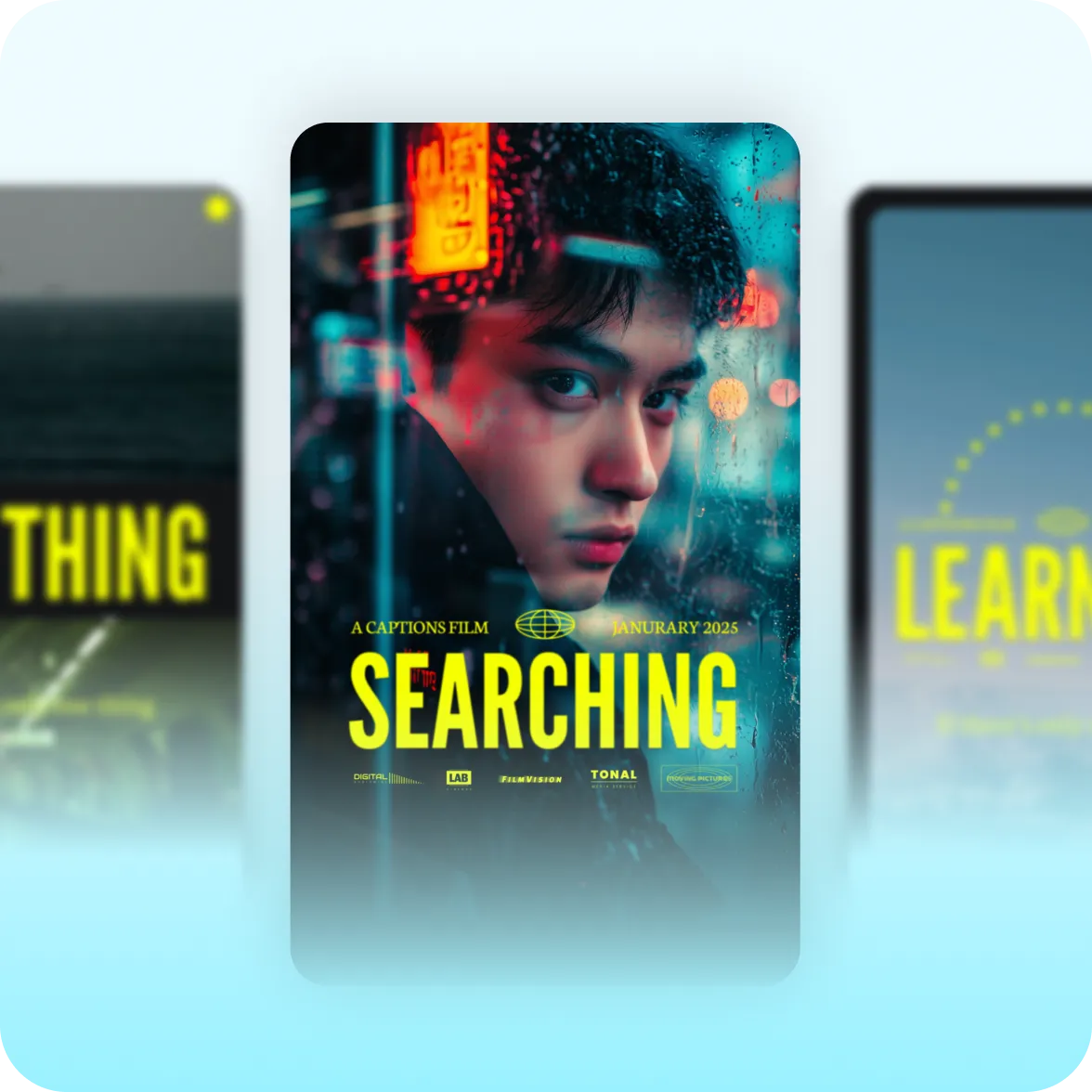
Your video opens with a cinematic border and prestige title card. It's the visual language of festival screenings and arthouse film posters, reimagined for today's scroll.
The Film style uses subtle, artful transitions. Think slow push-ins, deliberate cuts, and restrained effects that add emotional weight. Every edit feels like a deliberate choice.
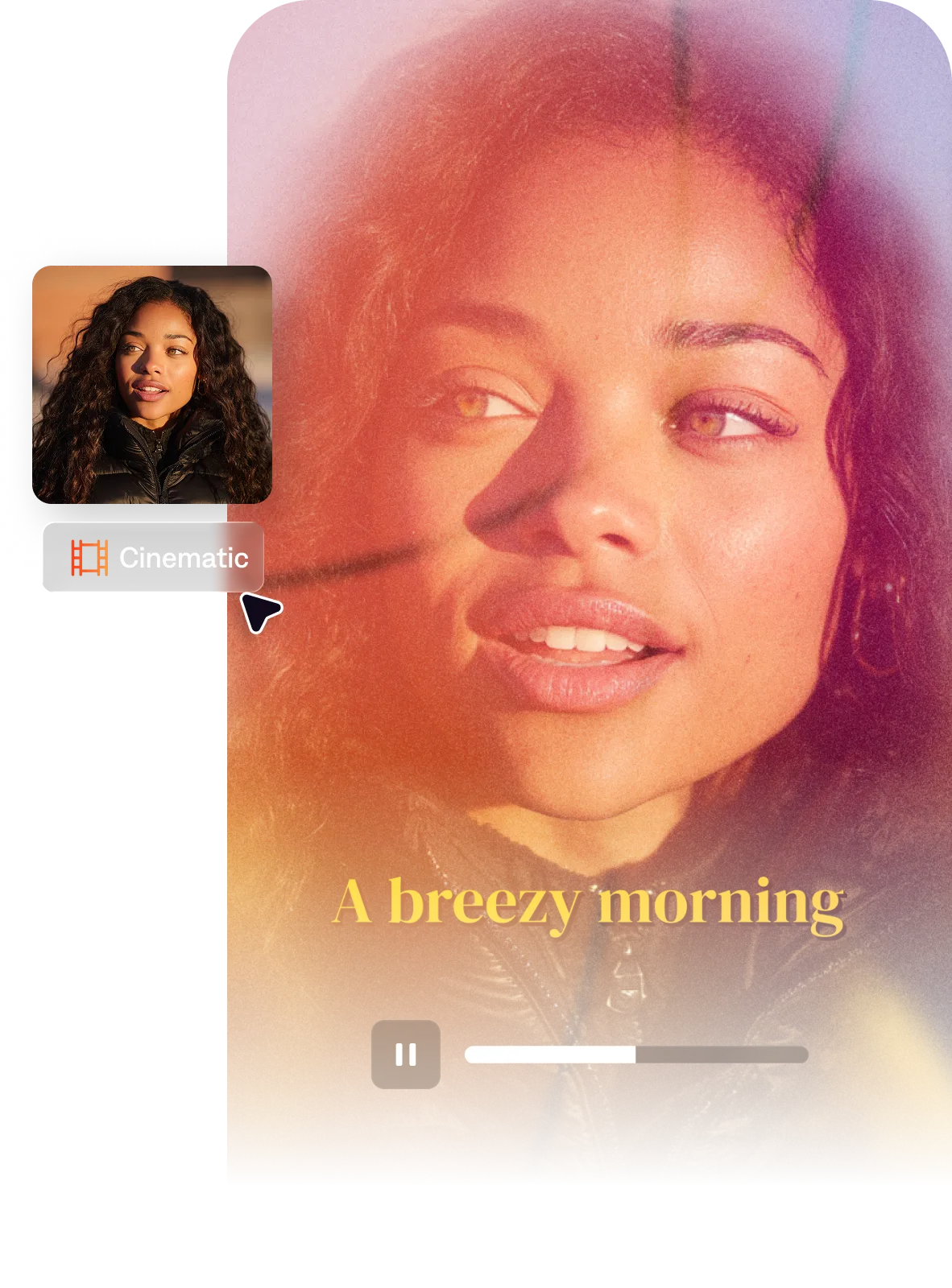
Film grain filters help your footage look like actual film. B-roll is arranged in stacked compositions that enhance the cinematic feel.
AI Edit turns any footage into a fully-edited video. To apply the Film aesthetic to your next video, start by picking your footage. Then, find the "Film" style in the library and apply it to the entire video at once.
By uploading a video to be edited using AI, you are agreeing to our Terms and have read our Privacy Policy.
We studied what makes prestige films feel so cinematic. Elements like emotional pacing, deliberate cuts and negative space. Those pieces come together to create a film-like quality that transforms any video.
The A24 aesthetic references the visual style associated with the production company A24 — known for films like 'Hereditary,' 'Moonlight,' and 'Everything Everywhere All at Once.' In short-form video, this translates to: thick letterbox bars (black bars at top and bottom of frame), muted or highly specific color grading, minimal or sparse title cards with serif typography, restrained pacing, and a general preference for visual ambiguity over clarity. The broader 'prestige film aesthetic' includes similar qualities: deliberate composition, film grain, and a sense that every frame was chosen rather than captured.
'Cinematic' is a broader term — it usually means any video that uses film-like techniques (grain, color grading, shallow depth of field, wider framing). 'Film aesthetic' tends to imply something more specific: prestige-cinema references, arthouse minimalism, deliberate visual restraint, and a rejection of the over-produced look. A cinematic video can still be emotionally accessible and visually warm; a film aesthetic leans toward artistic distance and intentional austerity. The distinction is roughly between 'inspired by cinema' and 'is cinema.'
Letterbox bars (black horizontal bars at top and bottom of frame) are a visual signal borrowed from theatrical film, where wide-format images are displayed on standard-ratio screens. In short-form video, they immediately signal ‘cinematic’ to viewers — the same way a serif title card or film grain does. They also create a visual frame that makes the subject appear more intentional and compositionally considered. The trade-off is that they reduce the active image area, which matters on small mobile screens. For narrative or storytelling content, the cinematic signal outweighs the crop.
Film is popular with narrative storytellers, arthouse creators and fashion creators. It helps add emotional depth and weight to your content, giving it a richness that stands out in busy feeds.